




Custom packaging is more than just a protective layer around your product. It is one of the first things customers notice about your brand. The right combination of colors, graphics, and printing quality can make your custom boxes look premium, increase brand recognition, and create a memorable unboxing experience.
In the competitive US packaging market, businesses need high-quality printing solutions that represent their brand professionally. Choosing the right printing method plays a major role in achieving an attractive and durable packaging design.
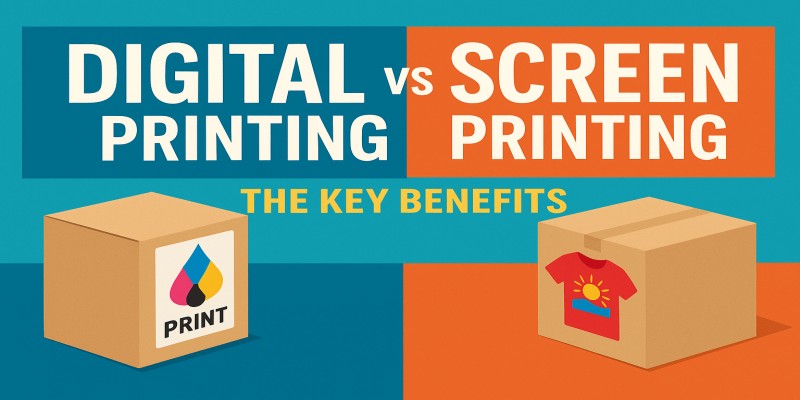
Two of the most popular options for custom box printing are digital printing and screen printing. While both techniques can create eye-catching packaging, they differ in terms of cost, color options, durability, production time, and ideal usage.
This detailed comparison of digital vs screen printing for custom boxes will help you choose the right printing technique based on your business needs.
What Is Digital Printing for Custom Boxes?
Digital printing is a modern printing method that transfers artwork directly from a digital file onto packaging materials. Unlike traditional printing methods, it does not require printing plates, screens, or lengthy setup processes.
This makes digital printing an excellent choice for businesses that need:
- Fast production
- Small quantity orders
- Detailed artwork
- Multiple colors
- Custom designs
Digital printing provides sharp images, smooth color gradients, and high-resolution graphics, making it popular among startups, ecommerce brands, and businesses testing new packaging concepts.
How Does Digital Printing Work?
The digital printing process involves the following steps:
- The packaging design is created and saved as a digital file.
- The file is uploaded to a digital printer.
- The printer applies ink directly onto the surface of the custom box.
- The printed packaging is dried and prepared for finishing.
Since there is no requirement for plates or screens, businesses can quickly change designs and print customized packaging without additional setup costs.
What Is Screen Printing for Custom Boxes?
Screen printing is a traditional printing technique that uses a mesh screen and ink layers to transfer designs onto packaging materials.
Unlike digital printing, each color requires a separate screen. This makes the process more suitable for simple designs, solid colors, and large production quantities.
Screen printing is widely used because it creates:
- Bold and vibrant colors
- Thick ink coverage
- Long-lasting prints
- Premium textured finishes
It is commonly chosen by brands that require durable packaging with a strong visual impact.
How Does Screen Printing Work?
The screen printing process includes:
- A separate screen is prepared for each color in the design.
- Ink is pushed through the mesh screen onto the packaging surface.
- Multiple layers are applied to create the final artwork.
- The printed boxes are dried and finished.
Because of its durable ink application, screen printing is ideal for packaging that requires long-lasting and resistant prints.
Digital vs Screen Printing: Complete Comparison
Before selecting a printing method for your custom boxes, compare the major differences between digital and screen printing.
| Feature | Digital Printing | Screen Printing |
|---|---|---|
| Best For | Small orders and detailed designs | Large quantity orders |
| Setup Cost | Low | Higher due to screens |
| Color Options | Unlimited colors | Limited colors |
| Image Quality | Excellent for photos and gradients | Best for solid colors |
| Production Speed | Faster turnaround | Slower setup process |
| Durability | Good for indoor packaging | Highly durable |
| Design Flexibility | Very high | Limited |
| Cost Efficiency | Better for small quantities | Better for bulk production |
1. Printing Quality Comparison
Both digital and screen printing can create professional-looking packaging, but they perform differently depending on the type of design.
Digital Printing Quality
Digital printing is ideal when your packaging requires detailed visuals and complex artwork.
Benefits include:
- High-resolution images
- Clear text and fine details
- Smooth color transitions
- Photorealistic graphics
- Complex logo designs
For brands using colorful illustrations, product images, or creative artwork, digital printing provides excellent visual results.
Screen Printing Quality
Screen printing creates a bold and premium appearance through thicker layers of ink.
Advantages include:
- Strong and vibrant colors
- Premium raised texture
- Sharp logo printing
- Long-lasting appearance
- Excellent results for minimal designs
It is a suitable option for brands that prefer simple, elegant, and professional packaging styles.
2. Color Options: Digital vs Screen Printing
Color selection is an important factor when designing custom packaging because colors influence brand recognition and customer perception.
Digital Printing Color Options
Digital printing offers almost unlimited color possibilities. It can reproduce complex designs with multiple shades, gradients, and detailed patterns.
It is suitable for:
- Colorful branding
- Product photography
- Illustrations
- Multi-color packaging designs
This flexibility makes digital printing popular among ecommerce businesses and small brands.
Screen Printing Color Options
Screen printing uses separate screens for each color, which means the number of colors is usually limited.
However, it provides excellent results for:
- Solid brand colors
- Minimal designs
- Simple logos
- Premium packaging styles
Although it offers fewer color choices, the colors appear bold and highly durable.
3. Which Printing Method Is More Cost-Effective?
The cost of custom box printing depends on several factors, including order quantity, design complexity, materials, and finishing requirements.
Both digital and screen printing have different cost advantages depending on your business needs.
Screen Printing Cost
Screen printing usually has higher initial costs because it requires:
- Separate screens for each color
- Manual setup and preparation
- Additional labor during production
However, when producing a large number of boxes, screen printing becomes more affordable because the setup cost is distributed across thousands of units.
Screen printing is more cost-effective for:
- Bulk packaging orders
- Large production runs
- Simple designs with fewer colors
- Long-term packaging projects
Digital Printing Cost
Digital printing has lower setup costs because it does not require screens or printing plates.
It is a budget-friendly option for:
- Small businesses
- Startups
- Limited edition packaging
- Product testing
Although the cost per box may be higher for very large quantities, digital printing provides better value for smaller orders because there are no expensive setup requirements.
4. Which Printing Method Offers Better Durability?
Packaging often goes through transportation, storage, and customer handling. Therefore, print durability is an important factor when selecting a printing technique.
Durability of Screen Printing
Screen printing is known for producing highly durable prints because it applies thicker layers of ink onto the packaging surface.
Key benefits include:
- Better resistance against scratches
- Long-lasting color quality
- Strong protection against fading
- Suitable for heavy handling
This makes screen printing a preferred option for retail packaging, luxury boxes, and products that require long-lasting branding.
Durability of Digital Printing
Digital printing provides excellent print quality, but the ink layer is generally thinner compared with screen printing.
It works well for:
- Indoor packaging
- Promotional boxes
- Seasonal products
- Short-term campaigns
For businesses that need packaging for extended outdoor exposure or rough handling, additional protective coatings may improve durability.
5. Which Printing Technique Has Faster Production Time?
Production speed can significantly affect packaging timelines, especially for businesses launching new products.
Digital Printing Speed
Digital printing offers a faster production process because it requires minimal preparation.
Advantages include:
- No screen preparation
- Quick design changes
- Faster turnaround
- Suitable for urgent orders
Businesses can move from design approval to production much faster compared with traditional printing methods.
Screen Printing Speed
Screen printing requires additional preparation before production begins.
The process includes:
- Creating screens
- Preparing inks
- Aligning colors
- Testing print quality
Although it takes longer during setup, it becomes efficient for high-volume orders where thousands of boxes are printed with the same design.
Digital vs Screen Printing: Which One Should You Choose?
The right printing method depends on your packaging goals, order quantity, design requirements, and budget.
Consider these factors before making your decision.
1. Order Quantity
Your order size plays a major role in selecting the right printing technique.
Choose digital printing if:
- You need a small quantity
- You are launching a new product
- You want to test different packaging designs
Choose screen printing if:
- You require thousands of boxes
- Your design will remain unchanged
- You want lower costs for bulk production
2. Design Complexity
Your artwork style also determines which printing method works best.
Choose digital printing for:
- Detailed illustrations
- Product images
- Multiple colors
- Complex patterns
- Gradient effects
Choose screen printing for:
- Simple logos
- Bold typography
- Minimal designs
- Solid brand colors
3. Budget Requirements
Your available budget should also influence your choice.
Digital printing is usually better for businesses that:
- Have limited budgets
- Need flexible order quantities
- Want affordable customization
Screen printing is better for businesses that:
- Have larger budgets initially
- Need high-volume production
- Want premium and durable finishes
Digital vs Screen Printing: Quick Decision Guide
| Your Requirement | Recommended Printing Method |
|---|---|
| Small quantity packaging | Digital Printing |
| Large quantity production | Screen Printing |
| Detailed artwork | Digital Printing |
| Simple logo design | Screen Printing |
| Fast turnaround | Digital Printing |
| Maximum durability | Screen Printing |
| Multiple color designs | Digital Printing |
| Luxury premium finish | Screen Printing |