





| Box Style | As Mention Above |
|---|---|
| Dimension (L + W + H) | All Custom Sizes & Shapes |
| Minimum Run ( For Boxes and Mylar Bags) | 100 Boxes - 1000 Mylar Bags ( 500 each design) |
| Paper Stock | 10pt to 28pt (60lb to 400lb) Eco-Friendly Kraft, E-flute Corrugated, Bux Board, Cardstock |
| Printing | No Printing, CMYK, CMYK + 1 PMS color, CMYK + 2 PMS colors |
| Finishing | Gloss Lamination, Matte Lamination, Gloss AQ, Gloss UV, Matte UV, Spot UV, Embossing, Foiling |
| Included Options | Die Cutting, Gluing, Scored,Perforation |
| Additional Options | Eco-Friendly, Recycled Boxes, Biodegradable |
| Proof | Flat View, 3D Mock-up, Physical Sampling (On request) |
| Turnaround | 7 - 8 Business Days |
| Shipping | FLAT Position |
What "Box Style" Actually Means
Most packaging conversations start in the wrong place. People ask about material first, or printing, or price per unit. Structure gets decided last, usually by whoever is drawing the dieline, and that is why so many brands end up with a box that prints beautifully and fails on the pack bench.
Custom box styles are really about the engineering of the carton. Where the panels fold. Whether the lid tucks, snaps or seals. Whether the bottom locks under load or relies on a single flap. Whether the box arrives ready to use or flat in a bundle. Two cartons cut from identical board, printed with identical artwork, can behave nothing alike once a product goes inside.
Getting this right early saves money in three places at once: material yield on the press, labour at assembly, and damage claims after shipping. It is the least glamorous decision in packaging and the one that quietly determines whether the rest of it works.
The Seven Custom Box Styles
Everything on this page falls into one of seven structural families. Here is what each is good at, and where each one lets you down.
Display and Showcase Boxes
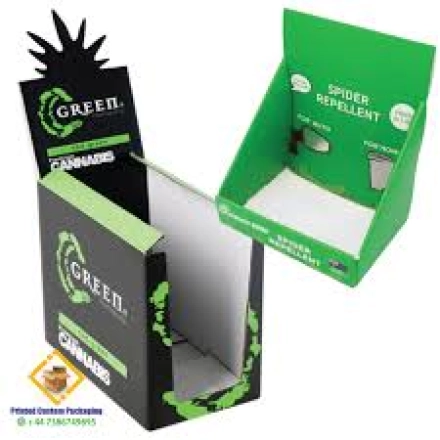
These are built to be looked at rather than shipped. Die-cut windows, open fronts, easel backs, counter-top trays and tiered stands all sit in this group. The product is doing the selling from a shelf or a checkout counter, so visibility comes before everything else.
The trade-off is structural. Every square inch you cut away for a window is rigidity you no longer have, which is why a display carton usually travels inside an outer shipper rather than on its own. Plan for that in your freight costs rather than discovering it after the first pallet arrives dented.
Where they earn their keep is impulse categories. Cosmetics, confectionery, supplements, phone accessories, anything bought in the last four feet before a register. Spend the finishing budget here. A window box with a matte laminate and a spot UV logo reads as considered from across an aisle.
Rectangular Boxes
The workhorse, and the correct answer far more often than people expect. Six flat panels, predictable creasing, the lowest cost per unit on this page, and the shape that wastes the least cube space on a pallet.
If you ship at any real volume, geometry beats novelty. Carriers bill on dimensional weight, and a rectangle fills a truck or a container more completely than any shaped carton ever will. Multiply a few cents of wasted air by fifty thousand orders and the maths stops being interesting and starts being your margin.
Rectangular does not mean plain. The panels are the largest uninterrupted print surface you can get, which makes them the best canvas on the site for full-bleed artwork, pattern work and long-form back-panel copy. Books, apparel, subscription programmes, tools, toys, hardware and most retail cartons live here.
Top Closure Boxes
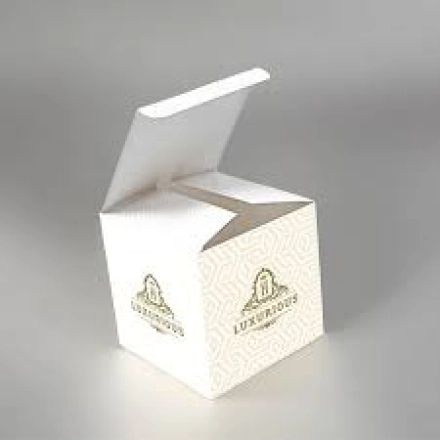
Everything about the customer's first impression is decided by how the lid behaves.
A straight tuck end keeps both closure flaps folding from the same panel, so the front face stays clean and uninterrupted. A reverse tuck end folds them from opposite panels, uses slightly less board and costs a little less to run, at the price of a visible flap edge on the front. Snap-lock tops resist popping open in a shopping bag or a courier sack. Seal-end tops require glue but are effectively tamper-evident, which matters in pharma, supplements and anything regulated.
The detail worth thinking about is repeat opening. A carton the customer opens once is easy. A carton they open every morning for a month is not. A tuck flap that has gone soft and creased after five uses reads as cheap no matter how good the printing was, and pillow-top or snap-lock closures hold up far better under that kind of use.
Bottom Closure Boxes
Weight travels down. Whatever fails first will almost always fail at the base, which makes this the closure that actually prevents damage claims.
A 1-2-3 auto-lock bottom, sometimes called a crash-lock, uses interlocking flaps that tighten under load rather than loosening. It sets up in roughly a second with no tape and no glue. A plain tuck bottom is cheaper to produce but will bow, then split, under anything dense.
The rule of thumb is simple. Glass, liquids, hardware, ceramics, multi-unit packs and anything over about two pounds should be on an auto-lock bottom. Light dry goods, cosmetics, sachets and small retail items can take a tuck without trouble.
There is a labour argument too. If someone on your team assembles cartons all day, the difference between an auto-lock and a manual tuck bottom is measured in hours per week, not seconds per box. That cost is invisible on a quote sheet and very visible on a payroll.
Figures and Pattern Boxes
Custom die-cut silhouettes. Hexagons, triangles, pyramids, pillow packs, house shapes, and outlines drawn to your own artwork. Slower to run, slower to fill, and nothing else stops a scroll or a shelf glance the same way.
Because die and plate charges are included, the real cost difference against a rectangle is not tooling. It is material yield, since an irregular shape leaves more waste on the sheet, and assembly time, since odd geometry takes longer to fold and load. Both are worth paying for when the box is part of the product experience: gift sets, event giveaways, limited runs, influencer seeding, luxury retail.
Order a physical sample on these before committing to a run. A shape that reads well on a flat proof does not always sit right in the hand, and that is the sort of thing you want to learn on one unit rather than five thousand.
Fold and Assemble Boxes
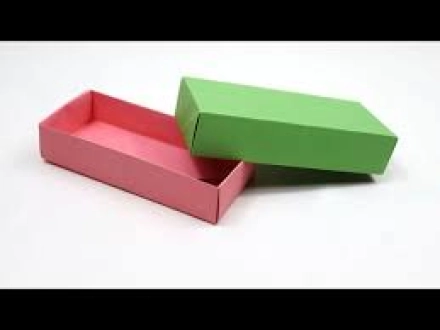
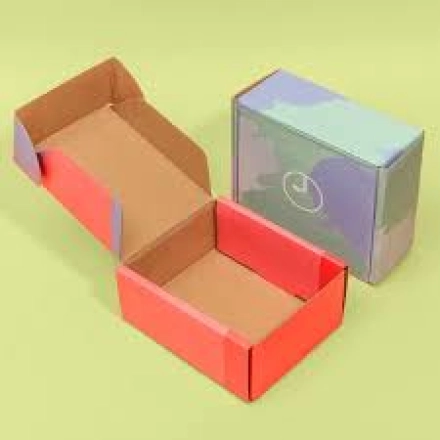
Ships flat, folds up without tape or glue. Side lock cartons, foot lock trays, tray and sleeve sets, two-piece boxes, fence partitions and self-locking counter displays all belong to this family.
The saving is rarely on the box itself. It is on everything around the box. Flat-packed cartons occupy a fraction of the shelf space of pre-glued ones, which matters when warehouse square footage is your constraint. Inbound freight drops for the same reason. And a packer who does not need a tape gun is measurably faster, with fewer repetitive strain complaints at the end of a peak season.
This is the default for subscription programmes, third-party fulfilment operations and anyone running seasonal spikes, because you can hold stock cheaply for eleven months and turn it into boxes in the twelfth.
CD Covers and Media Sleeves
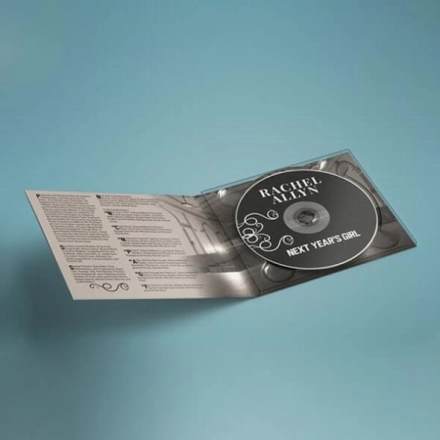
Physical media became a niche, not a memory. Musicians pressing a limited run, photographers delivering a client gallery on a drive, studios and agencies handing out something tangible at a pitch meeting.
Slim sleeves, gatefolds, printed inserts and optional booklet slots. The category is small but the standards are high, because the people ordering it are usually designers.
Choosing Between Custom Box Styles
Four questions settle it most of the time.
How much does it weigh? Past roughly two pounds, go auto-lock bottom and stop deliberating. Under that, a tuck end is fine and cheaper.
Who assembles it, and how many? If assembly is in-house and daily, structure that folds fast pays for itself quickly. If a converter glues them for you, the calculation changes.
Does the customer see the box before they buy, or after? Retail shelf means display and finish lead. Direct-to-door means crush resistance and dimensional weight lead. Very few boxes do both jobs well, and the ones that try usually do neither.
How does it store? Flat-pack when space is tight. Pre-glued when you would rather trade storage for speed at the pack bench.
If you are still unsure, send the product dimensions and weight. A ten-minute conversation at this stage regularly saves an entire reprint later.
Materials, and What Pairs With What
Cardstock from 10pt to 28pt covers most retail cartons. It takes ink beautifully, folds cleanly and is the standard for tuck-end and display work. Below about 14pt it starts feeling flimsy in the hand; above 24pt it stops folding crisply on tight creases.
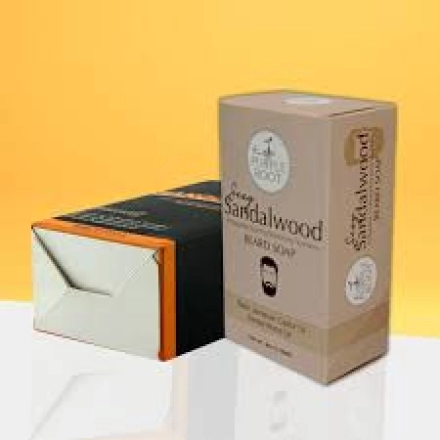
Kraft, brown or white, is uncoated and biodegradable, and reads instantly as low-fuss and natural. Popular with soap makers, coffee roasters, small-batch food and anything positioned as artisanal. It prints slightly softer than coated stock, which is a feature if the aesthetic calls for it.
E-flute corrugated adds crush resistance while still taking print almost as well as flat board. This is what you want for mailers, shippers and subscription boxes that pass through a carrier network unprotected. Heavier flutes exist for heavier freight.
Bux board sits between cardstock and corrugated on both cost and strength, and is a sensible middle ground for mid-weight retail goods.
Eco-friendly, recycled and biodegradable versions of all of the above are available, and the price gap has narrowed considerably in the last few years.
Printing and Finishing
Full CMYK covers the vast majority of artwork. Add one or two PMS spot colours when a brand shade has to be exact, which matters more than people assume: a logo colour that drifts between print runs quietly undermines everything else you are doing.
Finishing is where perceived value gets made. Gloss lamination is bright and durable. Matte hides fingerprints, which is why it is the right choice on dark stock. Soft-touch adds a suede-like texture that does more for the sense of quality than almost anything else per dollar spent.
On top of that: spot UV, foil stamping in gold, silver or holographic, embossing, debossing, die-cut windows with or without PVC panels, and printed inserts or partitions.
The combination most people are describing when they say a box "feels expensive" is soft-touch lamination with a spot UV or foil logo. High contrast between a flat matte field and one glossy element does more work than covering everything in shine.
What Is Included
Every style is made to your exact dimensions with no upcharge for a custom size. Dieline and structural design are free. There are no die, plate or setup charges. You receive a 3D digital proof before anything goes to press, with physical samples available on request. Shipping is free and boxes arrive flat-packed.
Standard turnaround is 7 to 8 business days after proof approval.
How to Order
Send the product dimensions and weight, the quantity you have in mind, and either your artwork or a rough idea of it. If you do not have measurements yet, send the product description and we will work from that.
You will have a quote inside 24 hours with a dieline attached, at no charge and with no obligation to order from it. Once you approve the 3D proof, production begins.
If the design leans on foil, embossing or an unusual die cut, ask for a physical sample. It adds a few days to the front of the schedule and removes the risk from the back of it.