






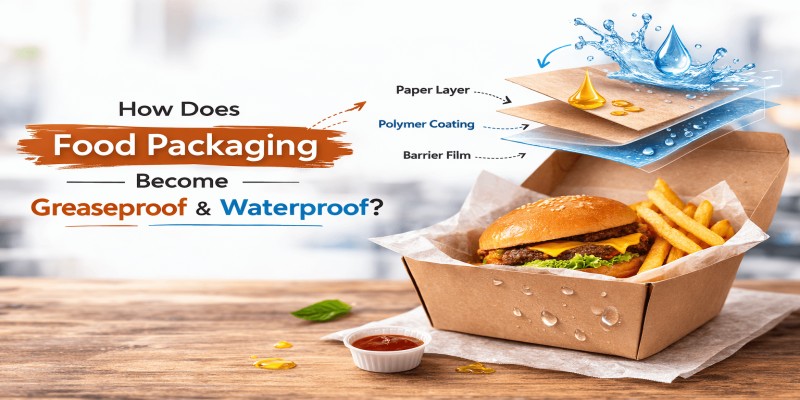
Every food business owner understands the frustration of packaging that leaks, absorbs grease, or collapses under moisture. Whether you run a bakery, a fast-food chain, a restaurant, or a food manufacturing company, the integrity of your packaging directly impacts your product quality, brand reputation, and customer satisfaction.
But have you ever wondered what actually makes food packaging greaseproof, waterproof, and food-safe? What materials and coatings go into creating packaging that holds up against oils, moisture, and environmental elements while remaining completely safe for food contact?
This guide breaks it all down so you can make smarter, more informed packaging decisions for your food business.
Why Greaseproof & Waterproof Packaging Matters for Food Businesses
Barrier coatings in food packaging create the ability to block water, water vapor, grease, and oil from passing through materials that are naturally porous.
Without these protective properties, paper-based packaging would absorb grease within minutes, leaving your products soggy, your branding invisible, and your customers dissatisfied. For food business owners, this translates directly into lost sales, negative reviews, and damaged brand credibility.
Barrier coatings help keep moisture and oils inside the packaging or keep moisture and oxygen out. Coating on a bakery boxes should contain oil and grease inside the box, while coating on a paper cup should keep fluids inside. Products such as single-use seasoning packets should be able to keep out oxygen.
In short, the right packaging coating is not just a functional necessity, it is a direct investment in your product's quality and your brand's professional image.
What Makes Food Packaging Greaseproof?
The Role of Barrier Coatings
Barrier coatings formulated with styrene-butadiene or styrene acrylic emulsion polymers are applied to paper and paperboard substrates as thin, lightweight, and translucent coatings. These coatings are largely invisible to the consumer but play a critical role in keeping packaging intact and products fresh.
Types of Greaseproof Coatings Used in the Industry
1. Wax Coatings
Wax coatings are one of the most common choices for custom food paper, providing excellent greaseproof and moisture-resistant properties. They are ideal for wrapping sandwiches, pastries, and other oily foods, ensuring that grease does not leak through the packaging making them a useful solution for delis, bakeries, and food trucks.
2. PE (Polyethylene) Coatings
PE-coated paper is a composite material made of base paper with a single or double layer of polyethylene film. The PE layer forms a barrier that prevents oil and grease from seeping through, keeping the outer packaging clean while maintaining the appearance and taste of the food. It is especially suitable for fast food, baked goods, and high-oil prepared meals.
3. PLA (Polylactic Acid) Coatings
PLA coating is made from corn starch and is both compostable and biodegradable. It is rapidly gaining popularity among food businesses that prioritize sustainability without compromising on grease resistance. For fried foods specifically, double-layer kraft paper with an inner PLA lining prevents oil penetration even under heat.
4. Water-Based Coatings
Water-based coating is the newest innovation, combining eco-friendliness with excellent resistance for fast-food packaging. These coatings are increasingly replacing traditional PE and wax options as food businesses shift toward more sustainable, recyclable packaging solutions.
5. Silicone Coatings
Silicone coatings add heat-resistant and non-stick properties to food paper. These are particularly useful for businesses that handle baked or hot foods. Silicone-coated parchment paper is perfect for managing baking trays or wrapping freshly baked items.
What Makes Food Packaging Waterproof?
Waterproofing in food packaging goes beyond just repelling surface moisture. It involves creating a barrier that maintains structural integrity even when packaging is exposed to humidity, condensation, cold storage, or direct liquid contact.
These coatings provide resistance to water, moisture, vapor, oil, grease, and oxygen, replacing traditional solutions such as polyethylene laminates, paraffin waxes, silicones, or materials containing intentionally added PFAS. Applications include a wide range of food and consumer packaging formats such as cups, trays, wraps, folding cartons, corrugated containers, and flexible packaging papers.
For food business owners, this means your packaging will not soften, collapse, or leak even in cold chain environments or during extended transportation.
Sustainable Waterproofing Alternatives
The food packaging industry is actively moving away from PFAS (per- and polyfluoroalkyl substances) chemicals previously used to achieve waterproofing due to growing health and environmental concerns.
Sustainable barrier coatings without PFAS include polyhydroxy alkanoates (PHA), polylactic acid (PLA), waxes and wax blends, proteins, cellulose and chitosan, starch, water-based polymer dispersions, polyvinyl alcohol (PVOH), graphene oxide (GO), and plant-based coatings.
These alternatives deliver comparable performance while meeting modern food safety regulations and consumer expectations for eco-responsible packaging.
What Makes Food Packaging Food-Safe?
Regulatory Compliance Standards
Food-safe packaging must meet strict regulatory standards to ensure no harmful substances transfer from the packaging material to the food product. Food-safe packaging must comply with FDA regulations under 21 CFR (Code of Federal Regulations) ensuring all materials used in direct food contact packaging are thoroughly tested, certified, and free from harmful chemical transfer. It is manufactured without harmful chemicals and is tested to ensure it does not transfer substances to food.
For food business owners, always sourcing packaging that carries these certifications is non-negotiable both for consumer safety and legal compliance.
How Food-Safe Coatings Are Tested
Grease resistance is scientifically measured using TAPPI T-559 or KIT Test methods. Manufacturers apply oil to the coated surface and observe the absorption time and penetration level. Other tests include the Cobb Value Test for water absorption rate, the Heat Resistance Test to assess coating performance under high temperature, and the Odor Neutralization Test to ensure no chemical transfer to food.
When sourcing packaging for your food business, always request test certificates and compliance documentation from your packaging supplier before placing bulk orders.
Choosing the Right Packaging for Your Food Product
Different food products require different coating solutions. Here is a quick reference guide for food business owners:
| Food Type | Recommended Coating |
|---|---|
| Fried foods, burgers, fries | PE coating or PLA-lined kraft |
| Bakery items, pastries | Wax coating or greaseproof paper |
| Hot beverages, cups | PE or water-based coating |
| Frozen foods | Dispersion coating or PE Green |
| Baked goods, non-stick trays | Silicone-coated parchment |
| Eco-conscious brands | PLA, water-based, or plant-based coatings |
When selecting the right food packaging, it is important to consider the specific needs of your product, choose the right coatings, such as greaseproof, waterproof, and heat-resistant for functionality, and select eco-friendly options like water-based or biodegradable coatings to stay in line with sustainability goals.
The Rise of Eco-Friendly Greaseproof & Waterproof Packaging
Sustainability is no longer just a trend it is a business imperative. The global demand for sustainable and safe food packaging has grown dramatically, with the paper-based packaging market predicted to surpass $370 billion by 2030, driven by environmental awareness and regulatory pressure.
Modern eco-friendly barrier papers are manufactured from recycled paper stock and coated with biobased barrier layers containing high levels of renewable organic carbon. Unlike conventional barrier packaging materials that incorporate polyethylene or foil, these options contain no intentionally added plastics or fluorochemicals, facilitating compatibility with standard paper recycling streams.
For food business owners, adopting sustainable greaseproof and waterproof packaging is not just good for the environment, it is a powerful differentiator that resonates with today's eco-conscious consumers and strengthens brand loyalty.
Final Thoughts Packaging That Protects & Performs
Understanding how food packaging achieves greaseproof, waterproof, and food-safe properties empowers you to make better sourcing decisions for your business. The right coating protects your product, maintains its quality, ensures regulatory compliance, and reflects the professional standard your brand represents.
At CustomBoxesZone we manufacture premium food packaging solutions built with the right materials, coatings, and certifications to meet the demands of modern food businesses. Whether you need greaseproof boxes for bakery products, waterproof packaging for frozen foods, or fully sustainable food-safe solutions, we deliver quality, compliance, and customization all in one place.
Contact our packaging experts today for a free consultation and instant quote, and build packaging that truly protects your product and your brand.