






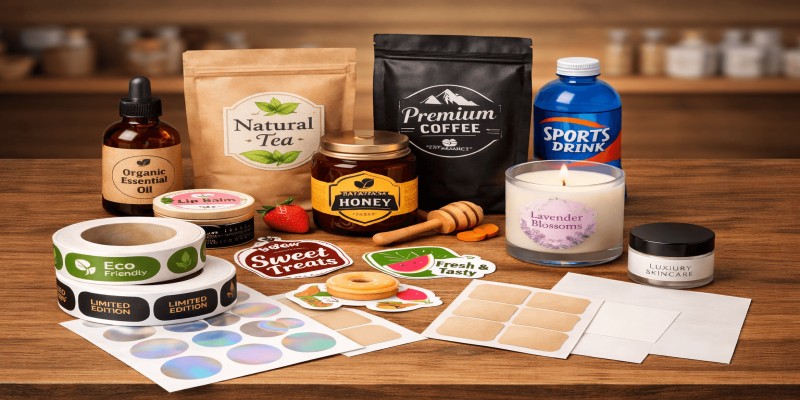
Choosing the right labels and stickers for product packaging is more important than many brands realize. A label is often the first detail a customer notices when they pick up a product, open a shipment, or compare items on a shelf. It does more than identify what is inside. It helps communicate quality, supports compliance, builds brand recognition, and influences whether packaging looks premium, practical, or forgettable.
For growing brands, the challenge is not deciding whether labels and stickers matter. The real challenge is choosing the right type for the product, packaging surface, storage conditions, and overall brand image. A sticker that looks great on a laptop may not be the right solution for a cosmetic jar. A label that works well indoors may fail in a refrigerated environment, during shipping, or under moisture and friction.
That is why businesses should think beyond color and shape alone. The best packaging labels are selected based on material, finish, durability, readability, and how well they support the product’s presentation. In many cases, the right choice comes down to understanding the differences between popular options such as vinyl stickers, PVC stickers, and transparent stickers. Packaging suppliers and sticker-printing guides commonly frame the decision around material performance, application surface, and end use, which is exactly how buyers should approach it.
Why Labels and Stickers Matter in Product Packaging
Labels and stickers are small packaging elements, but they do major work. They carry brand names, product details, ingredients, usage instructions, warnings, expiry data, barcodes, and promotional messages. At the same time, they affect how attractive and trustworthy a package looks.
A strong label can make simple packaging feel polished and intentional. A poor-quality label can make even a good product appear low-value. If the sticker peels at the edges, fades after handling, bubbles on curved surfaces, or clashes with the packaging design, it can hurt customer confidence.
For this reason, businesses should treat labels as part of the packaging system, not as an afterthought. The right label material helps your packaging stay clean, readable, and attractive from production to delivery to customer use.
Start With the Packaging Surface
Before choosing a label material, look closely at the surface where the label will be applied. This should be the first decision point.
Ask these questions:
Is the packaging smooth, textured, curved, flexible, or rigid?
Will the label go on glass, plastic, paperboard, corrugated stock, or metal?
Does the surface collect moisture, oil, or dust?
Will the package be squeezed, folded, refrigerated, or shipped long distances?
For example, a product in a glass jar or cosmetic bottle may need a label with better adhesion and a more premium finish. A shipping box seal may need durability more than elegance. A transparent bottle may benefit from a clear sticker that lets the product show through.
When you start with the surface and use case, the material decision becomes much easier.
Understand the Main Types of Labels and Stickers
For most packaging brands, three options deserve special attention: vinyl stickers, PVC stickers, and transparent stickers. Each one supports different packaging goals.
Vinyl Stickers
Vinyl stickers are widely used because they are flexible, durable, and visually strong. They are often chosen for branding, promotional packaging, and labels that need to handle regular contact. Many suppliers position vinyl as a durable, waterproof option for business branding and product packaging.
Vinyl stickers are a smart choice when you need:
- Long-lasting adhesion
- Resistance to light moisture and routine handling
- Bold color printing
- Custom shapes and eye-catching branding
They work especially well for retail packaging, takeaway packaging, subscription boxes, and branded product labels where appearance matters.
PVC Stickers
PVC stickers are often selected when packaging needs extra toughness. On your own site, the PVC page already positions them as a strong choice for labels that must stay intact through shipping, handling, and storage. That makes them especially useful for packaging that moves through more demanding supply chains.
PVC stickers are suitable when you need:
- Stronger durability
- Better resistance to wear
- Dependable performance in transit
- A more robust label for storage-heavy products
For packaging applications where friction, handling, or surface stress is common, PVC can be a practical option.
Transparent Stickers
Transparent stickers are ideal when you want the design to look clean, modern, and integrated into the packaging itself. Clear sticker guides commonly describe them as a premium choice for brands that want the packaging surface or product color to remain visible.
Transparent stickers work well for:
- Glass jars and bottles
- Cosmetics and skincare packaging
- Gourmet food packaging
- Minimalist product branding
- Premium retail presentation
If your brand identity depends on a refined, less cluttered appearance, transparent stickers can be one of the best options.
Match the Material to the Product Environment
One of the biggest mistakes businesses make is choosing labels based only on appearance. The better approach is to match the material to the environment the product will face.
Think about where the product will go after labeling:
- Warehouse shelves
- Retail displays
- Delivery trucks
- Refrigerators
- Bathroom counters
- Kitchen cabinets
- Outdoor events
If the product will face moisture, friction, temperature changes, or regular handling, durability matters much more. If the packaging is meant to look elegant on a shelf, finish and presentation may matter more.
This is why a single “best” sticker type does not exist for every product. The right material depends on how the product is packaged, sold, transported, and used.
Choose the Right Finish for the Brand Look
After material, finish is the next big decision. The finish affects both visual impact and user perception.
A matte finish usually creates a softer, modern, and premium look. It works well for luxury, minimalist, and wellness brands.
A gloss finish is brighter and more reflective. It often makes colors pop and can work well for energetic, youth-focused, or food-related packaging.
Transparent finishes help the design blend into the packaging and are especially effective when you want the container or product to stay visible.
The best finish depends on your packaging design. If your box or bottle already has a strong visual identity, the label should support it rather than overpower it.
Think About Size, Shape, and Readability
A label should fit the package correctly and remain easy to read. A design may look attractive on screen but fail on the actual product if the shape, placement, or text sizing is wrong.
When planning label size and shape, consider:
- How much information must appear
- Whether the package is flat or curved
- How the label fits into the front-facing design
- How easily customers can scan details like ingredients, instructions, or batch information
Small labels can look elegant, but only if they remain practical. Large labels can communicate more information, but only if they do not crowd the package.
The goal is balance. Good packaging labels feel intentional, not forced.
Consider Branding Consistency Across Product Lines
If you sell multiple products, your labels should work as part of a system. A good packaging strategy does not only focus on one SKU. It builds consistency across the whole line.
That means using labels and stickers that support:
- Consistent logo presentation
- Recognizable brand colors
- Matching finishes
- Flexible size adaptation
- A unified look across jars, boxes, pouches, and bottles
This is one reason many businesses use a combination of materials. For example, a brand may use transparent stickers for cosmetic bottles, vinyl stickers for promotional packaging, and PVC stickers for shipping-sensitive or high-contact items.
Which Option Is Best for Different Packaging Needs?
Here is a simple way to decide.
Choose vinyl stickers when you want a versatile, branded, durable option for general packaging and promotional use.
Choose PVC stickers when your labels need extra strength for shipping, storage, or heavier handling.
Choose transparent stickers when the goal is a premium, clean, modern look that lets the package or product remain visible.
If you are building a broad packaging system, it often makes sense to combine all three rather than forcing one material into every application.