






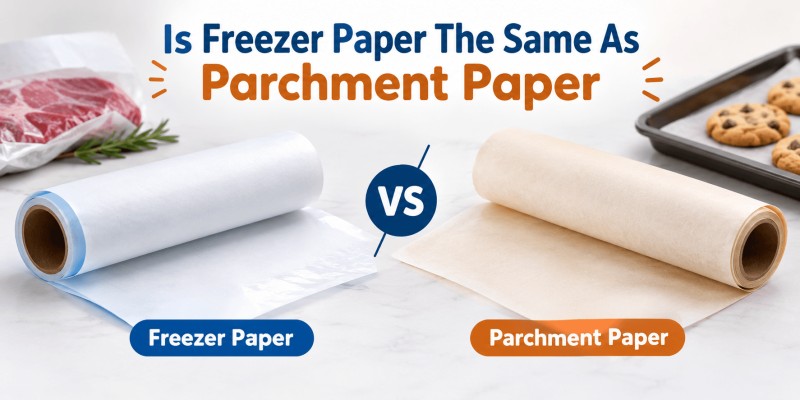
If you have ever stood in the kitchen aisle staring at two rolls that look almost identical, you are not alone. Freezer paper and parchment paper are two of the most confused items in any pantry, and mixing them up can genuinely ruin a meal or a batch of frozen meat. The short answer is no, freezer paper and parchment paper are not the same thing. They are made differently, coated differently, and built for completely different jobs in the kitchen.
In this guide, we will break down exactly what separates these two papers, how each one is made, when to use which one, and what happens if you accidentally swap them. By the end, you will never have to guess again.
What Is Freezer Paper?
Freezer paper is a thick, sturdy paper designed specifically for long-term cold storage. It is made from two layers: one side is plain, uncoated paper, and the other side carries a thin coating of polyethylene (a type of food-safe plastic) or wax.
That coated side is the whole point of freezer paper. When it faces inward against meat, fish, or produce, it creates a moisture barrier that keeps air out and prevents freezer burn. Freezer burn happens when air reaches frozen food and dries it out, so a proper barrier is what keeps meat tasting fresh even after months in the freezer.
Key Features of Freezer Paper
- One coated side, one plain side: The plain side is easy to write or label on, which is why butchers and home cooks use it to date-mark packages.
- Thicker and more durable than parchment, made to survive freezing temperatures without cracking or tearing.
- Not heat-resistant: The plastic or wax coating will melt, smoke, or release fumes if placed in an oven or microwave.
- Best for storage, not cooking: It is meant to wrap and protect, not to line a baking sheet.
What Is Parchment Paper?
Parchment paper looks similar at first glance, but its construction is entirely different. It is a dense, cellulose-based paper that gets treated with a silicone coating on both sides. That silicone layer is what makes parchment naturally non-stick and able to handle high oven temperatures without burning or releasing harmful chemicals into food.
Because of this heat resistance, parchment paper is a kitchen staple for baking cookies, roasting vegetables, lining cake pans, and even covering dishes in the microwave to prevent splatter.
Key Features of Parchment Paper
- Silicone-coated on both sides, unlike the single-sided coating on freezer paper.
- Heat-resistant, typically safe up to around 420–450°F depending on the brand.
- Naturally non-stick, so food releases cleanly without added grease or oil.
- Reusable in many cases, since it holds up to multiple bakes if it stays clean and intact.
Freezer Paper vs Parchment Paper
The confusion between these two papers usually comes down to one thing: coating. Everything else follows from that single difference.
The Coating Material
Freezer paper uses a plastic or wax coating on one side. Parchment paper uses silicone on both sides. This is the single biggest reason the two are not interchangeable: plastic and wax cannot handle oven heat, while silicone is built for it.
Heat Tolerance
Parchment paper is designed to sit inside a hot oven for extended periods. Freezer paper is designed for the opposite extreme: cold storage. Put freezer paper in the oven, and the coating can melt, smoke, or transfer an unpleasant taste (and potentially unsafe residue) onto your food.
Moisture and Air Barrier
Freezer paper's coating is built to block air and lock in moisture, which is exactly what frozen meat needs to avoid freezer burn. Parchment paper is not designed as an airtight barrier, so it will not protect food in the freezer the same way.
Thickness and Durability
Freezer paper is generally thicker and heavier, since it needs to survive being folded, taped, and stacked in a freezer for weeks or months. Parchment paper is thinner and more flexible, since its job is to sit flat against a baking sheet or pan.
Best Use Case
Here's the simplest way to remember it: freezer paper is for the freezer, and parchment paper is for the oven. One protects food from cold and air exposure; the other protects food from sticking and burning during heat exposure.
Can You Substitute One for the Other?
In most cases, no, and it is worth understanding why before you try.
Using parchment paper for freezing is possible in a pinch, but it will not provide nearly the same level of protection against freezer burn, since it lacks the plastic barrier that blocks air and moisture. Food wrapped in parchment for long-term freezer storage will likely dry out faster and lose flavor sooner than food wrapped properly in freezer paper.
Using freezer paper in the oven is the riskier swap. Because of its wax or plastic coating, freezer paper is not built to handle direct heat. At oven temperatures, that coating can break down, smoke, and potentially leach into food, something you want to avoid entirely.
If a recipe calls for parchment paper, freezer paper is not a safe substitute. If you are ever out of one and need a quick alternative, wax paper, aluminum foil, or a reusable silicone baking mat are generally safer swaps depending on the task, but for the best results, it is always worth using the paper that was actually designed for the job.
How to Choose the Right Paper for Your Task
When you are unsure which paper to reach for, ask yourself one simple question: is this food going into the freezer or into the oven?
- Freezing meat, fish, or produce for long-term storage: Use freezer paper, coat the side facing the food, and label the plain side with the date.
- Baking cookies, roasting vegetables, or lining a cake pan: Use parchment paper for a non-stick, oven-safe surface.
- Wrapping food for a short trip to the fridge, not the freezer: Either paper can work here since freezer burn is not a concern, but parchment is often easier to find and reuse.
Why This Matters Beyond the Kitchen
This distinction is not just a home-cooking detail; it matters for anyone in food packaging, meal prep services, butcher shops, or bakeries. Choosing the wrong paper at scale can mean spoiled inventory, customer complaints, or products that simply do not perform as expected on the shelf or in cold storage. Businesses that package meat, baked goods, or frozen items need to match the paper to the product, the same way a home cook does, just on a larger scale and with consistency across every order.
Final Thoughts
Freezer paper and parchment paper may sit near each other in the store and look deceptively similar, but they are built for opposite environments. Freezer paper's plastic or wax coating is designed to lock out air and protect food from the cold, while parchment paper's silicone coating is designed to handle heat and prevent sticking in the oven. Knowing the difference and using each paper for the job it was actually designed for is the easiest way to keep your food fresh, your baking clean, and your kitchen (or packaging line) running smoothly.