






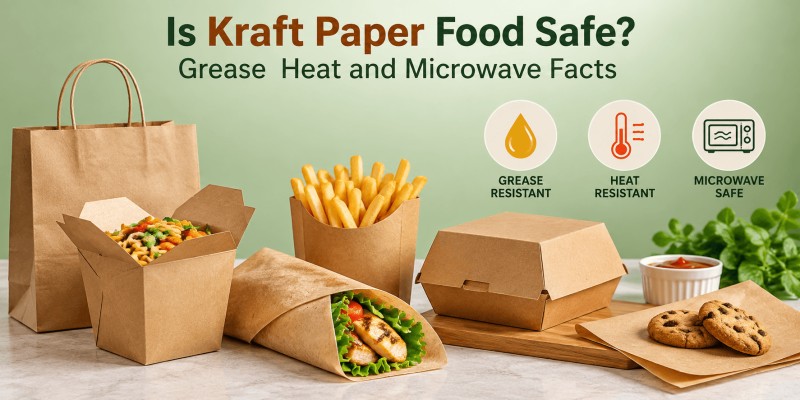
Yes, kraft paper is food-safe, but only when it's certified food-grade. Food-grade kraft is made without harmful chemicals and is approved for direct contact with food. However, plain kraft paper is not naturally greaseproof or fully heat-resistant on its own; it needs a food-safe coating or lining for oily and hot foods. And while Kraft can handle short microwave use, not every Kraft container is microwave-safe. This guide explains exactly what's safe, what isn't, and what to look for.
Kraft paper is everywhere in the food world wrapped around burgers, folded into takeout boxes, lining bakery bags, and holding everything from fries to pastries. Its natural brown look signals "eco-friendly" and "wholesome," which is exactly why so many food brands and home cooks reach for it.
But that popularity raises a fair question: is kraft paper actually safe for food? And can it handle the two things food throws at packaging: the hardest grease and heat? The short answer is that kraft is one of the safest, most sustainable food-packaging materials available, but only when you understand its limits and choose the right type.
This guide covers everything people actually want to know: whether Kraft is food-safe, whether it's greaseproof, whether you can microwave it, whether it's heat-resistant, and whether it's recyclable and compostable with clear, practical answers you can act on.
What Is Kraft Paper, Exactly?
Kraft paper is a strong, durable paper made through the "kraft process," which converts wood into wood pulp using chemicals and then washes them out, leaving tough, flexible fibers. The name comes from the German word "kraft," meaning "strength," and strength is kraft paper's defining trait.
That strength is why Kraft is so widely used for packaging. It resists tearing, holds weight, and folds cleanly into boxes, bags, and wraps. In its most common form it's the familiar natural brown color, though it can also be bleached white.
For food use specifically, kraft paper comes in different grades. Standard kraft is used for shipping, wrapping, and industrial purposes. Food-grade kraft is manufactured and certified specifically for contact with food, and that distinction is the entire heart of the "Is kraft paper food-safe?" question.
Is Kraft Paper Food-Safe?
Yes, food-grade kraft paper is safe for direct contact with food. But the key phrase is food-grade, because not all kraft paper is made or certified for food use.
Food-grade kraft is produced under strict standards, free from harmful dyes, chemicals, and contaminants, and is approved by food-safety authorities for direct food contact. When you see kraft used for burger wraps, bakery bags, sandwich liners, and takeout boxes from reputable suppliers, it's this food-grade type.
Standard or recycled industrial kraft, on the other hand, is not automatically safe for food. Recycled kraft can contain traces of inks, adhesives, or contaminants from its previous life, and non-food-grade kraft may use dyes or treatments never intended to touch food. Using the wrong grade is where safety problems actually come from, not from Kraft itself.
The bottom line: kraft paper is food-safe when it is certified food-grade. Always confirm your supplier provides food-grade, food-contact-approved kraft and, for anything beyond dry foods, that it meets the relevant coatings and safety standards too.
PE (polyethylene) lining adds a thin plastic layer that fully seals against grease and moisture common in coffee cups and heavy-duty food containers.
Silicone or wax treatments create a slick, oil-resistant surface used in baking papers and liners.
Bagasse or laminated barriers provide grease and moisture resistance in more sustainable formats.
So the accurate answer is: kraft paper can be greaseproof, but only when it's coated or lined for it. For dry or lightly oily foods, uncoated food-grade kraft is fine. For burgers, fries, fried snacks, and saucy items, you need kraft with a greaseproof barrier; otherwise, the grease will eventually soak through.
Can You Put Hot Food in Kraft Paper?
Yes, kraft paper handles warm and hot food well, which is a big reason it's used for takeout. It tolerates the heat of a fresh burger, hot fries, warm pastries, and takeout meals without breaking down.
But there are limits worth knowing. Kraft handles heat from food, but it is still paper, so it isn't built for direct, sustained high heat like an open flame or a hot oven surface. And very hot, greasy food combined with time can still challenge uncoated kraft; the heat softens the fibers while the grease works through them.
For hot, oily food, the same rule applies as with grease: a food-safe barrier coating helps the kraft hold up. Coated or lined kraft containers keep hot takeout secure without weakening, which is why quality takeout packaging uses treated kraft rather than plain paper.
In short: kraft paper is safe for hot food and comfortably handles the temperature of most takeout. For the hottest, greasiest items, choose coated or lined kraft for the best performance.
Is Kraft Paper Microwave-Safe?
Mostly yes but with important exceptions, and this is the question people most often get wrong.
Plain, uncoated food-grade kraft paper is generally safe for short microwave use. It doesn't contain metal, so it won't spark, and it can handle brief reheating without issue. Many Kraft takeout boxes and bags are used to reheat food directly.
However, "kraft" and "microwave-safe" are not automatically the same thing, for three reasons:
Metal handles or staples. Some Kraft containers, like certain takeout boxes, have metal wire handles or staples. Metal sparks in a microwave, so these must be removed first, or the container transferred to a dish.
Certain coatings and linings. Some coatings that make kraft greaseproof can soften, melt, or warp under microwave heat. A wax lining, for example, may not hold up. PE-lined kraft is often fine for short reheating but can degrade with prolonged high heat.
Grease and overheating. Very greasy food gets extremely hot in a microwave, and prolonged heating can scorch or weaken any paper, kraft included.
The safe approach: check that your kraft container is labeled microwave-safe, remove any metal parts first, use short bursts rather than long blasts, and when in doubt, transfer the food to a microwave-safe dish. Uncoated food-grade kraft for a quick reheat is generally fine; unknown coatings and metal parts are the things to watch.
Is the Kraft Paper Oven Safe?
This one needs more caution. Kraft paper is not designed for oven use the way parchment paper is.
While Kraft can tolerate the warmth of hot food, an oven's direct, sustained high heat is a different matter. At high temperatures, uncoated paper can scorch and brown and, at extreme heat, become a fire risk. Coated kraft is even less suitable, because the coating can melt or release fumes.
If you need paper for the oven, parchment paper (which is silicone-treated specifically for oven heat) is the right tool, not kraft. Kraft's strength is packaging and serving food, not cooking it. Use it to hold and present food, and keep it out of the oven unless a specific product is clearly labeled oven-safe.
Is Kraft Paper Freezer-Safe?
Yes, kraft paper handles cold far better than heat. It can be used to wrap and store food in the fridge and freezer, and it's commonly used for butcher paper and frozen-food wrapping.
For long-term freezer storage, coated or lined kraft performs best, because the barrier prevents moisture loss and freezer burn. Uncoated kraft is fine for short-term chilling and wrapping, while lined kraft protects food better over longer periods. Either way, cold is not a problem for Kraft the way high heat can be.
Is Kraft Paper Recyclable?
Yes, plain, uncoated kraft paper is widely recyclable, and this is one of its biggest advantages. It's made from natural wood pulp, breaks down in standard paper recycling streams, and is accepted in most curbside programs.
The catch is coatings. Kraft that has a plastic (PE) lining, wax coating, or heavy grease saturation can be harder to recycle, because the barrier has to be separated from the fiber, and heavily greasy paper is often rejected by recyclers since oil contaminates the recycling process.
So the recyclability depends on the type:
Uncoated kraft is readily recyclable in most programs.
Grease-soaked kraft is often not recyclable, as the oil contaminates it (this is the same reason greasy pizza boxes are frequently rejected).
PE-coated or wax-lined kraft recyclability varies; some facilities handle it, many don't.
For the best recyclability, choose uncoated food-grade kraft where the food allows, and look for water-based or compostable barrier coatings rather than plastic linings when a barrier is needed.
Is Kraft Paper Compostable and Biodegradable?
Yes, uncoated kraft paper is both biodegradable and compostable, which is a major reason eco-conscious brands choose it. Made from natural wood fiber, plain kraft breaks down naturally over time and can be composted in home and commercial systems.
Again, coatings are the deciding factor. Uncoated kraft and kraft with certified compostable coatings will break down properly. Kraft with a conventional plastic (PE) lining will not fully compost, because the plastic layer remains. For a genuinely compostable product, look for uncoated kraft or kraft with a certified compostable barrier and check for compostability certifications if that claim matters to your brand.
This is why kraft has become the signature material of sustainable food packaging: in its natural, uncoated form, it's renewable, recyclable, biodegradable, and compostable all at once.
Does Kraft Paper Contain Harmful Chemicals or PFAS?
This is a growing concern, and a fair one. Historically, some grease-resistant paper packaging used PFAS ("forever chemicals") to repel oil and water. PFAS have come under heavy regulation, and a growing number of US states now restrict intentionally added PFAS in food-contact paper.
The good news: food-grade kraft itself is not inherently a PFAS product, and the industry has moved firmly toward PFAS-free grease barriers. Reputable food-packaging suppliers now offer kraft with PFAS-free coatings that achieve grease resistance without the harmful chemistry.
What this means for you: plain food-grade kraft is safe and chemical-free, and when you need a greaseproof barrier, you should specifically choose PFAS-free coatings. If you're a food business, confirm your supplier's kraft is food-grade and PFAS-free; it's both a safety best practice and, increasingly, a legal requirement.
Kraft Paper vs. Other Food Papers
To put kraft in context, here's how it compares to the other papers people ask about.
Kraft vs. parchment paper: parchment is silicone-treated specifically for oven and high-heat use, so it's the choice for baking. Kraft is stronger and better for packaging, wrapping, and serving, but not for oven cooking.
Kraft vs. wax paper: wax paper has a wax coating that makes it moisture- and grease-resistant for wrapping and cold use, but it can't handle heat (the wax melts). Kraft is more versatile and stronger and handles warm food better.
Kraft vs. white (bleached) paper: white paper is the same base material as bleached kraft, with a brighter surface for printing. Natural kraft is favored for its eco look and is slightly less processed.
Each has its place, but Kraft's all-round strength, safety, and sustainability make it the most versatile for food packaging and serving.
What to Look for in Food-Grade Kraft Packaging
If you're a food business choosing kraft packaging, a few checks ensure you get the safe, high-performing version:
Confirm it's food-grade. The single most important point is that the kraft must be certified for direct food contact, not standard industrial or recycled kraft.
Match the barrier to the food. Dry and lightly oily foods are fine in uncoated kraft; burgers, fries, and fried and saucy foods need a greaseproof coating or lining.
Insist on PFAS-free coatings. For grease resistance, choose PFAS-free barriers to stay safe and compliant.
Check heat and microwave needs. If customers will reheat the food, choose kraft rated for microwave use and avoid metal parts.
Consider end-of-life. For the best sustainability, choose uncoated or certified-compostable kraft so it can be recycled or composted.
Getting these right means your kraft packaging is safe, performs under grease and heat, and lives up to its eco-friendly reputation.
Custom Food-Grade Kraft Packaging
Kraft's combination of safety, strength, and sustainability is exactly why it's one of the most popular materials for custom food packaging. Food brands use food-grade kraft for burger boxes, fry boxes, takeout containers, bakery boxes, sandwich wraps, and more, all printable with branding while keeping that natural, eco-friendly look that customers trust.
The key is working with a manufacturer who provides genuinely food-grade, PFAS-free kraft, with the right barrier for your food and the option to reheat where needed. Done right, custom kraft packaging protects the food, satisfies food-safety expectations, supports your sustainability story, and carries your brand all in one material.
If you're packaging food, food-grade kraft is one of the smartest choices available: safe when certified, greaseproof when properly coated, microwave-friendly with care, and recyclable and compostable in its natural form.