


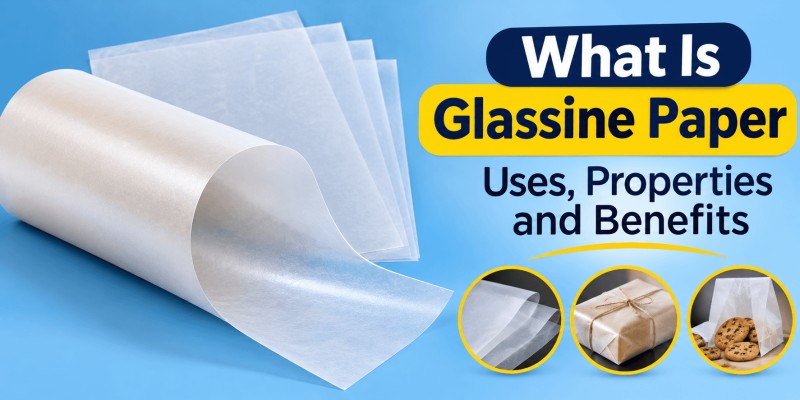
Glassine paper is a smooth, lightweight, and translucent paper made from wood pulp. Its dense structure provides resistance to air, grease, and moisture to a certain extent. Commonly used in food packaging, product wrapping, and crafts, glassine paper offers a clean appearance and reliable protection. It is also recyclable and biodegradable under suitable conditions, making it a practical packaging choice.
How Is Glassine Paper Made?
The process is what separates glassine from ordinary paper, and it happens in three main stages.
1. Pulping: Wood is broken down into cellulose fibers. For glassine, the pulp must be thoroughly refined so the fibers are very fine and well hydrated.
2. Beating: The pulp is beaten for a long time. This makes the fibers soft and gel-like, so they pack together very tightly when the sheet forms.
3. Supercalendering: The formed sheet passes repeatedly between heated and polished rollers under heavy pressure. This squeezes out air pockets and flattens the surface, giving glassine its gloss, smoothness, and translucency.
The important point is that glassine gets its grease and moisture resistance from this mechanical process, not from a wax or plastic coating. Plain glassine is simply very dense paper.
Key Properties of Glassine Paper
Grease and oil resistance
The dense structure stops oils from soaking through, which makes it useful for baked goods, confectionery, and greasy snacks.
Moisture and air resistance
It shields contents from humidity and dust, though it is not fully waterproof.
Translucency
You can partly see the product through the sheet, which adds a premium, unboxing-ready look.
Smooth, glossy finish
The surface slides easily and does not shed fibers or scratch delicate items.
Strength for its thickness
Glassine is thin, yet it resists tearing and folds well. Thicker grades are stiffer and more durable.
Acid-free and pH-neutral options
Many grades are made acid-free, which is why archivists, photographers, and artists trust them for long-term storage.
Recyclability
Since it is paper without a plastic or wax layer, plain glassine is generally recyclable and biodegradable. Local recycling rules vary, though, and laminated or coated versions may not qualify.
Common Uses of Glassine Paper
Glassine’s mix of protection and elegance explains why so many industries use it.
Food Packaging
Bakeries and sweet shops use glassine to wrap cookies, pastries, and chocolates and to line trays and boxes. Its grease resistance keeps packaging looking clean, and its translucency lets customers see the treat inside. Check that the specific grade is approved for direct food contact before using it that way.
Interleaving Sheets
Glassine is widely used to separate and protect delicate surfaces, such as:
- Printed photographs and artwork
- Book illustrations
- Stickers, labels, and decals
- Fabric and garment layers
Because the surface is smooth and non-abrasive, it prevents rubbing, sticking, and transfer.
Stamp and Collectible Storage
Stamp collectors have used glassine envelopes for generations. Archival, acid-free grades protect valuable items without chemically damaging them over time.
Apparel and Fashion Packaging
Brands wrap t-shirts, scarves, and accessories in glassine bags or sheets instead of clear plastic. It protects against dust and light moisture while giving an eco-friendlier look.
Jewelry, Cosmetics, and Gift Packaging
Small, high-value products look more premium when tucked inside translucent glassine. It works as an inner layer inside boxes, adding protection and a touch of luxury.
Art, Craft, and Laboratory Use
Artists use it to protect finished work. Craft makers use it for tracing and layering. Labs sometimes use it as inexpensive weighing paper.
Glassine vs Wax Paper vs Parchment Paper
These three are often confused, but they behave differently.
| Feature | Glassine | Wax Paper | Parchment Paper |
|---|---|---|---|
| Surface treatment | None (supercalendered) | Wax coating | Silicone coating |
| Appearance | Glossy, translucent | Waxy, semi-clear | Matte, brownish, or white |
| Grease resistance | High | High | High |
| Heat resistance | Low | Very low | High (oven safe) |
| Best for | Wrapping, interleaving, inner packaging | Short-term food wrapping | Baking and cooking |
| Recyclability | Generally good (plain) | Limited | Limited |
The simple rule is that parchment is for the oven, wax paper is for cold food wrapping, and glassine is for protective and presentation packaging.
Advantages of Glassine Paper
- Protective yet lightweight: It adds very little weight or bulk to shipments.
- Eco-friendlier than plastic: It is paper-based and often recyclable, which supports sustainable packaging goals.
- Looks premium: The shine and translucency lift the unboxing experience.
- Safe for delicate items: It will not scratch, stain, or stick to most products.
- Versatile: One material works for food, fashion, art, and gifts.
- Cost-effective: It is usually affordable compared with specialty films and laminates.
Limitations to Keep in Mind
An honest guide should mention the downsides too.
- Not fully waterproof: It resists moisture but won’t survive soaking.
- Not heat resistant: It should not go in an oven or microwave.
- Limited strength for heavy items: It works best as inner packaging or for light products.
- Lower print quality than coated paper: The glossy surface needs the right inks and methods.
- Recycled paper may be greener: Some sustainability experts note that 100% recycled paper can have a lower footprint than virgin-fiber glassine, so material choice depends on your goals.
Can You Print on Glassine Paper?
Yes, though it needs more care than ordinary paper. Because the surface is so smooth and non-absorbing, standard inks can smudge or take longer to dry. Printers typically use methods such as flexographic or gravure printing with suitable inks.
For best results:
- Keep artwork simple, with bold logos, clean lines, and limited colors.
- Expect translucency to affect color, since darker products behind the sheet can change how designs appear.
- Choose a heavier grade for better stability during printing.
- Test a sample before approving a large run.
Simple one- or two-color branding, such as a logo pattern or brand name, usually looks best on glassine.
How to Choose the Right Glassine Paper
Define the purpose
Is it for food contact, product wrapping, or interleaving? Food use calls for a food-safe grade, and archival use calls for acid-free paper.
Check the thickness
Heavier grades add stiffness and durability, while lighter ones work for simple wraps and layers.
Decide on the format
Sheets, rolls, bags, and envelopes each suit different workflows.
Consider color and transparency
Natural, white, and tinted options change both look and visibility.
Match it to your outer packaging
Glassine works best as part of a complete system. Pairing it with sturdy outer boxes protects the product and delivers a polished presentation.
Pairing Glassine With Custom Packaging
Glassine is rarely the whole package. It shines as an inner layer inside a well-made box. A printed rigid or folding box with a glassine wrap around the product creates a layered unboxing experience that feels thoughtful and premium. This combination is popular for bakery items, cosmetics, apparel, candles, and gift sets.
Why Brands Trust CustomBoxesZone
At CustomBoxesZone, we help brands build packaging that protects products and presents them beautifully, from outer boxes to the inner details that complete the experience. Here is how we make it easier:
- Free shipping: on your orders
- No die-cut charges: so custom shapes don’t inflate your budget
- Free design support: to bring your packaging idea to life
- No minimum order quantity: so small brands can start without pressure
Whether you are launching a boutique bakery, a skincare line, or an apparel label, our team can help you create custom boxes that work seamlessly with materials like glassine.
Final Thoughts
Glassine paper may look simple, but it combines grease resistance, a smooth glossy finish, and light protection in a recyclable, paper-based material. It is not the right choice for heavy-duty or heat-based uses, but for wrapping, interleaving, and elevating the unboxing experience, it is hard to beat.
Understand its strengths and limits, match the grade to your product, and pair it with the right outer packaging. That is how you turn a thin sheet of paper into a real brand advantage.